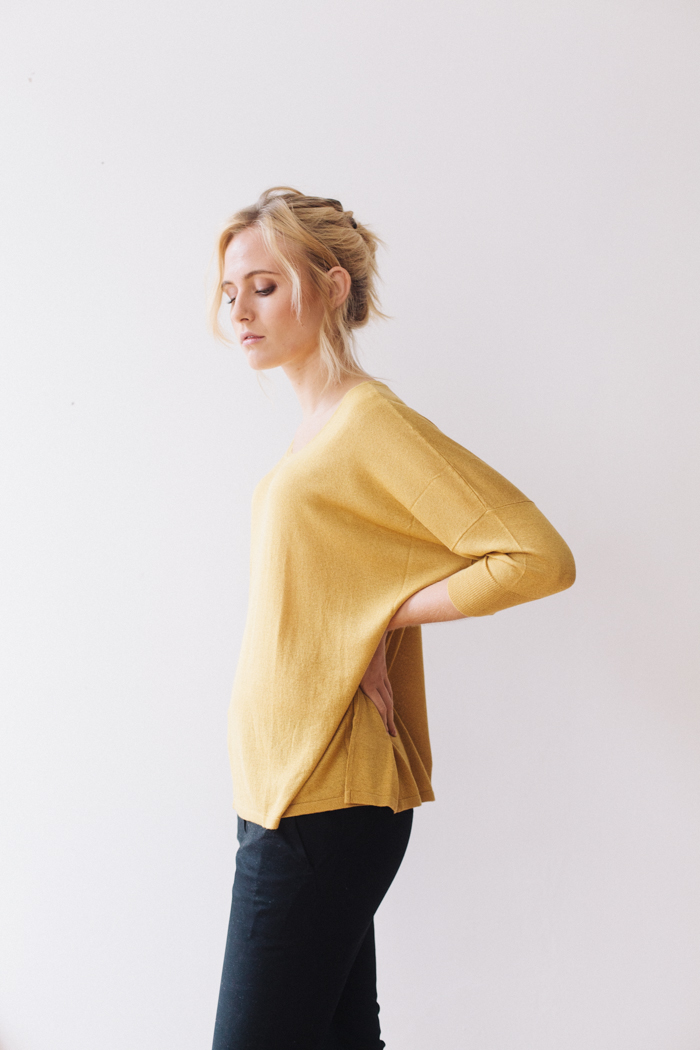


Does the “sustainable fashion” conversation still conjure images of hippies in hemp dresses? As London Fashion Week rolls out its runways, meet the brands who are bridging the sustainable / style divide…

Organic pima cotton T-shirt, REV by rev en vert (available November)
“Sustainable fashion.” It doesn’t exactly have the sexiest ring to it, speaking (STILL!) to hemp sack dresses and a certain breed of dreadlocked, ecologically aware but stylishly challenged do-gooders. But hopefully the conversation about fashion with a conscience has reached a tipping point.
It’s not exactly common knowledge, and no doubt the mega-billion business at large would prefer it to stay that way, but fashion is second only to the energy industry when it comes to polluting our planet (you know, that leaving, breathing organism that you are an atom-sized and intimately connected particle of). Which doesn’t even take into account the human rights issues, right? A sweat shop is NOT a hip salon where you go for an infrared sauna.
Which, okay okay, is all sounding kind of worthy again. And fashion is meant to be FUN, right? Well sorry to kill your retail therapy buzz, but as a switched on, soulful consumer, you don’t get to ignore this conversation any more.
And thankfully, brands like Reformation, Awave Awake and Auria London, are stepping in to bridge the sustainable / style divide. Seriously, what cool girl in New York, London or LA isn’t currently lusting after one of Reformation’s amazing up-cycled dresses? And what kind of positive new message about “killer clothes that don’t kill the environment,” as they like to put it, does the fact this includes style icons like Rosie Huntington-Whitely and Alexa Chung? Go Alexa, go!
New online boutique reve en vert is another business busy re-imagining the way we think about fashion that’s as good for the planet as it is for your Facebook profile pic. Here, founders Cora Hilts and Natasha Tucker explain why the issue is one the fashion industry HAS to address, and select their favorite sustainable pieces for fall.
What part does choosing sustainable fashion play in living a spiritually aligned life?
“For us it’s fundamentally about making choices that keep a bigger picture in mind. Ultimately making decisions from a more conscious perspective is about aligning yourself with something greater than just your own perspective, and that’s why sustainable and ethical fashion choices are so important for us at rêve en vert. It’s about aligning an ethos that’s important to each of us in all aspects of how we treat our bodies.”
What was the big epiphany for you when it came to wanting to start a sustainable fashion business?
“The big epiphany for me came during my Masters programme in Environmental Politics at Kings College in London. In a lecture, a professor mentioned that second only to energy, fashion is the most polluting industry in the world. I had been on a different course career-wise but I was really shocked, and this newfound knowledge made me aware of something I really felt needed changing. Natasha came on board soon after that, and together we started rêve en vert as a way of contributing to the solution.”
Some people don’t like the word ‘sustainable’ (as it suggests sustaining a system that is fundamentally flawed). How else can you describe the ethos of your company and brand?
“We would like to think that we’re about progress, and hopefully effecting change. We would really like rêve en vert to be seen as a platform for ‘positive consumerism,’ that makes it accessible and easy for people to shop from a selection of designers who are making things beautifully as well as responsibly.”
What are your top three rules for responsible retail therapy?
“Buy timeless pieces that will always look good. View buying things as an investment, not as a quick cheap fix. Choose quality over quantity.”
What would you like to tell the fashion industry at large about the clothing manufacturing business?
“That fashion, no matter how beautiful or seemingly well-done, is not really high fashion unless it’s made by actual craftsman, being paid fair wages for their skills and using only the highest quality of materials. Almost all top designers now produce overseas, with only the minimal finishing processes done in places like Italy of France, whilst the rest is made in un-ethical factories in the developing world. Designers with the resources to do so should be held accountable to manufacturing with people and the environment in mind. Precedents need to be set and the notion of ‘quality’ needs to be redefined to include production with respect and integrity as core values.”
To celebrate London Fashion Week, Reveenvert.com will be offering a 15% discount on all purchases made on the site through September 16 2014
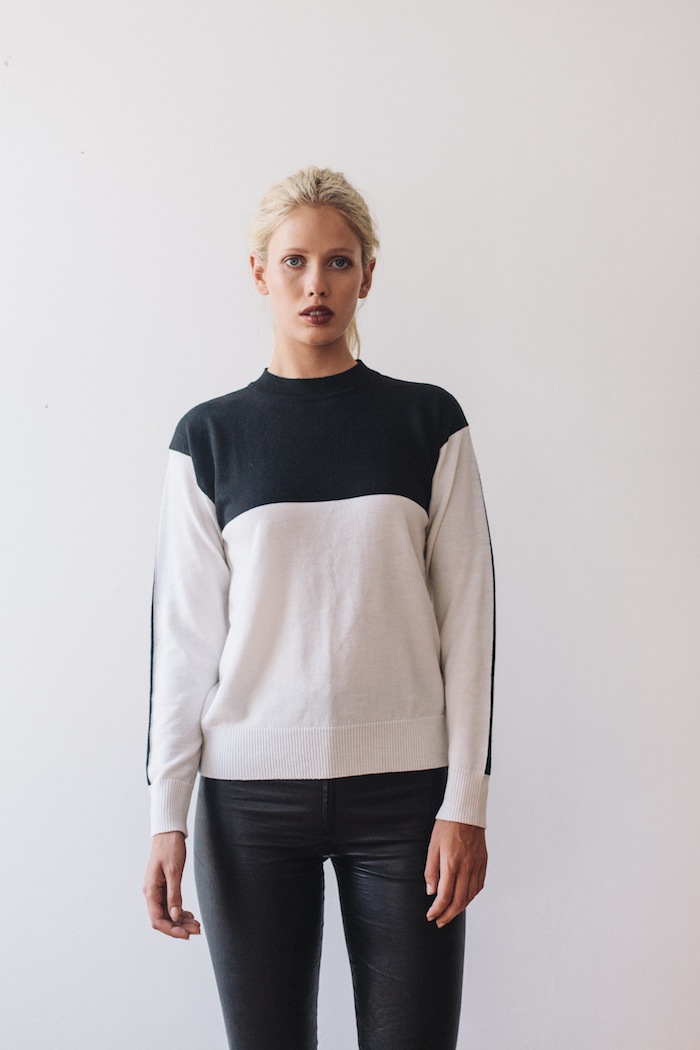
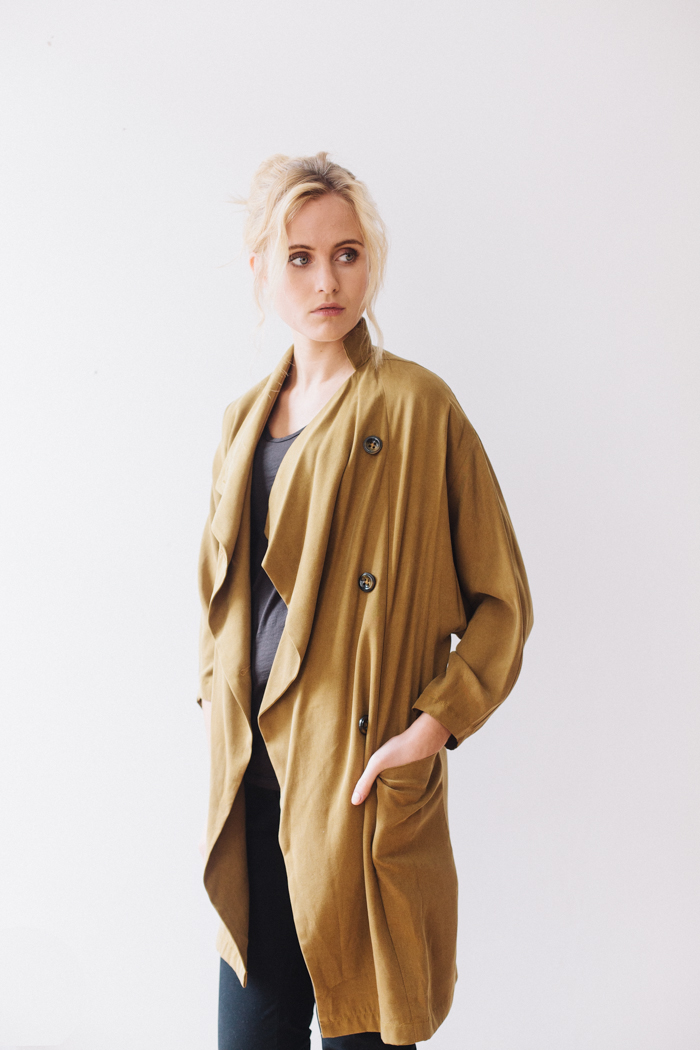
H. Fredriksson trench, £265
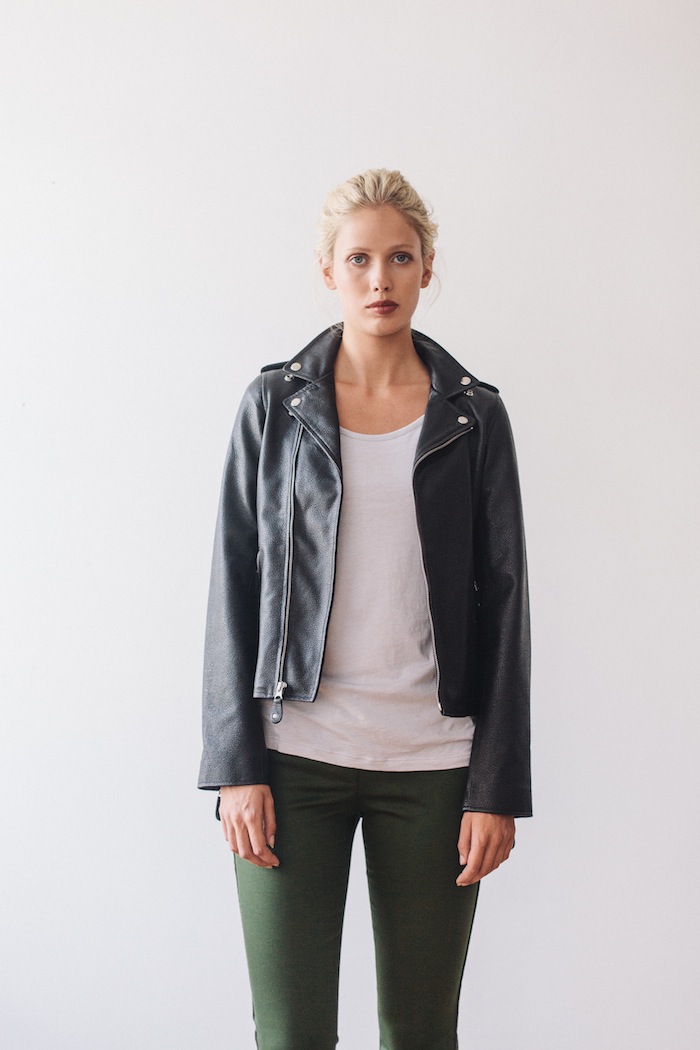
The Sway jacket, £375; Svilu trousers, £240